
Under The Lamp
We are liable to think today that art, for its greater and superior form to emerge, needs a free medium to function, and also unrestrained channels to flow through.
Truly great artists have ultimately broken the invisible barriers imposed upon them, either by their critics, or their family, or the governor. Whether or not the barriers themselves played a role in their work, is the question at hand. If freedom and the absence of a “Big Brother” watching over you really would be the most optimal channel within which to function, then the opposite, constraint and restrictions upon the work, would produce far inferior, replaceable, and inconsequential art. Paradoxically, the reverse is seen to be true.
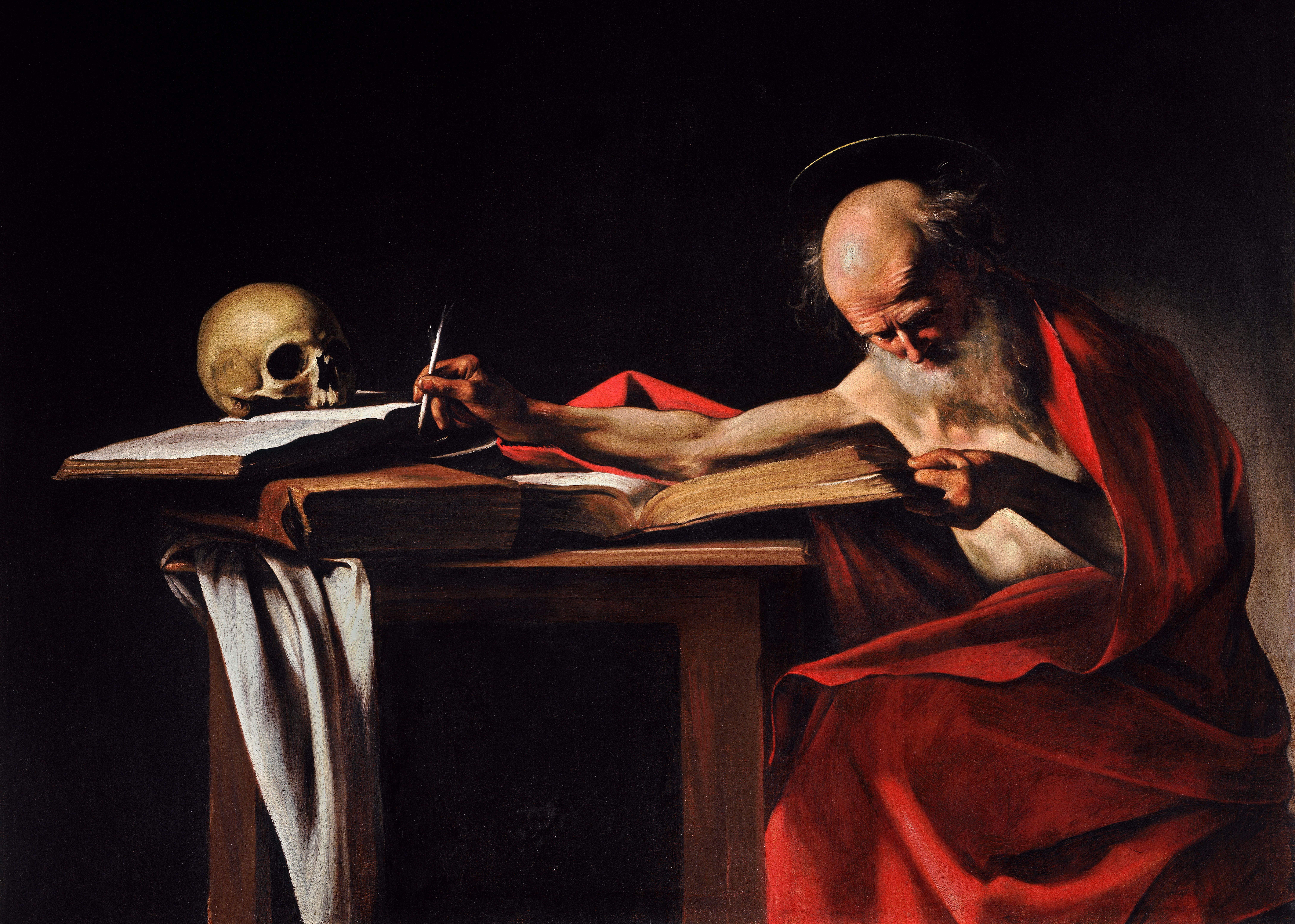
For arguably the most accomplished novelist from Japan, Mishima, his father Azusa was the “Big Brother”. His father considered the art of writing “effeminate” and used to dispose of his manuscripts upon finding them. Young Mishima, in terror, used to wake all night writing under the light of a lamp. And from his childhood all the way up to his dramatic death, this routine held in place for him and never changed, for after a time he imposed it upon himself.
Dostoevsky wrote one of his best works in twenty-six days. He was under pressure from a contract that could make him lose rights to all the work he produced for nine years, and all his procrastination and spending left him twenty-six days to write a full-length novel. With the help of a stenographer, later his wife, he did indeed finish the fully revised manuscript in that time, and called it “The Gambler”.
These are exactly the conditions under which all modern artists would dread to function and complain of their art being “restricted” or their self-expression being “commercialized”. But under those very conditions do we see the greatest work in progress. Nonetheless, this persuasion and attack upon the artist and their creative capability is not the only way for an artist to be restrained.
In most cases, it is the artist themself functioning under rigorous order, and keeping it in place deliberately for their art. This “order” or “routine” when practiced by enough people over a long enough period of time, becomes a tradition. Such traditions give birth to the most profound discourse between artists across centuries. Traditions also make the evolutions of major thought and movements of art easier to track.
The ghazal, South Asia’s most enduring literary tradition, arranges completely self-contained couplets, each bound by a repeating refrain and a preceding rhyme. No couplet depends on the one before it, yet a single quantitative meter, the beher, holds the entire poem together. It is written for recital, and a ghazal that cannot be spoken well, by no means is written well. So essentially, the writer has to speak it as they write it.
Byzantine icon painting was constrained entirely by theological and Orthodox ruling, not artistic will. Poses, colors, and compositions were fixed by canon, with only a select few biblical figures permitted for depiction. The painter did not innovate or personalize anything. That need for self expression was replaced by centuries of religious discipline, which in contrast, created a larger collective identity for the artist to place themself in.
And yet, some of the greatest and most true inspirations for artists came through these traditions and many others. It is contradictory, even absurd, that something that has the exact same way of being done, can be instantly individually recognized and then categorized objectively as better or worse than the other, while to the artists, it is just them placing themselves within the stringent regulations and demands of the form to create something that checks all the boxes.
It is an underexplored thought for the modern artist that true and great expression does not care about their circumstances. There is simply so much energy within the human that it will burst out from wherever in whatever way. We don’t need more space to let ourselves out. Sure, it would be better if we had the choice for it, but it by no means eliminates the eventual need for order. What art really needs, is a channel to flow clearly through when coming out.
What all of these restrictions, whether self-imposed or not, and no matter how cruel, offer, is concentration. An escape from choice, and indecision. It gives the mind relief from every other method or idea outside the box of form, and puts its energy into one singular channel. The concentration that goes into a manuscript that you know you might lose tomorrow, or one that you would have to finish for the sake of the rest of your work, is far greater than anything born of freedom.
What they also, spiritually, build within the artist is love. Love for the art form and the work that they do. There is a misconception that we give towards things, and compromise our own needs and wants for them, because we love them. The statement is so ubiquitous that it sounds offensive to call it a misconception, when in reality it is the other way around. The things that we give our energy and efforts to, and compromise for, we end up loving.
The artist builds these qualities of sacrifice in an almost divine practice of ego death through their work. They leave that which is convenient, and find satisfaction within from giving to something that could one day be. The process of art is not to cut off the noise, but to identify your own voice from amongst it, and cherish it as the most important one for you.